Opening the tarot library...
Arcana
Minor
Element
Air
Astrology
Venus in Aquarius
Card Imagery
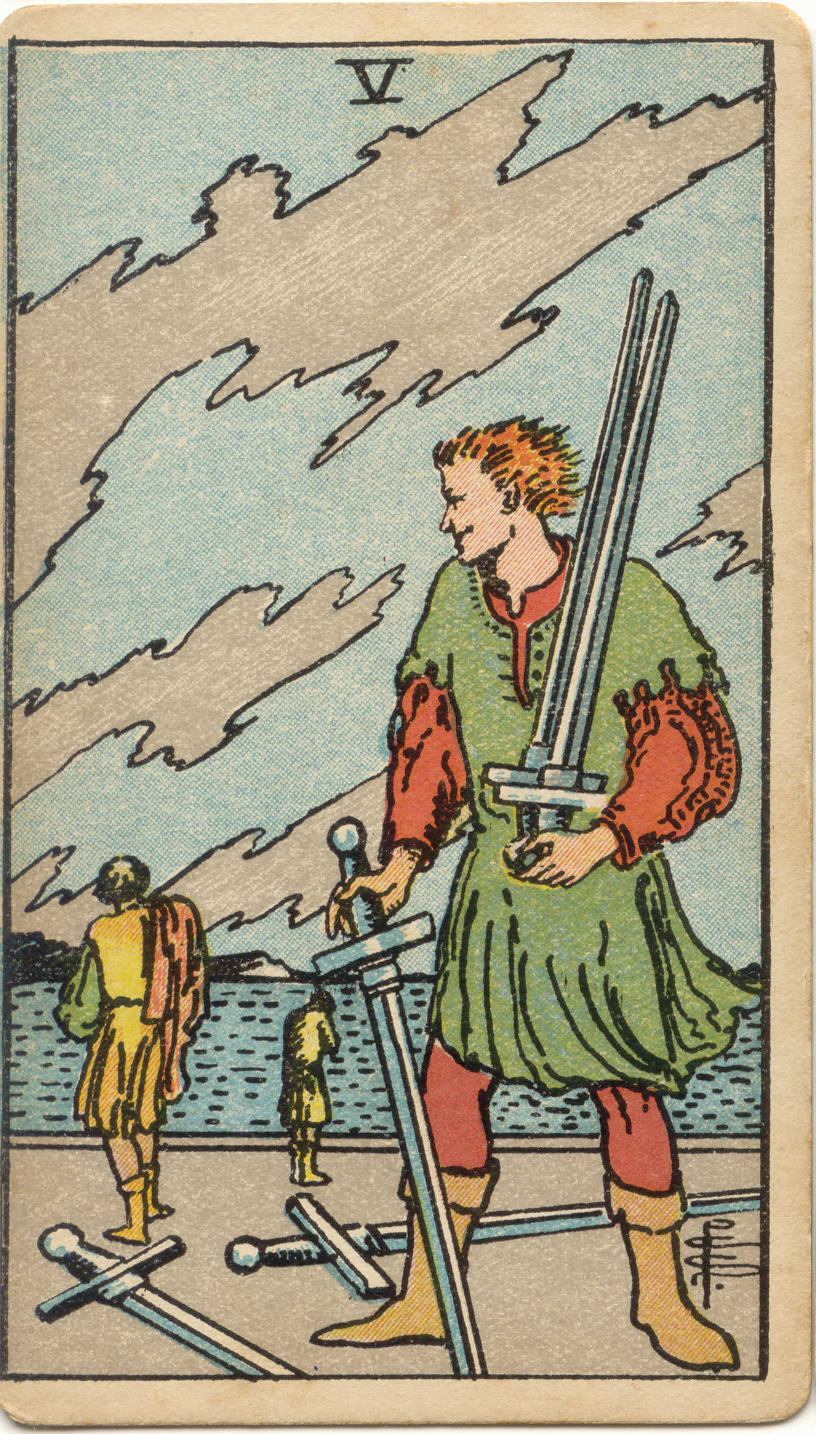
A figure holds three swords with a smirk while two defeated figures walk away. The sky is cloudy and heavy. The winner does not look happy — they look isolated. The scene shows that winning through force often means losing connection.
Five of Swords
Conflict / Hollow Victory
Minor ArcanaSwordsAir✧ Venus in Aquarius
“Winning this argument may cost you the relationship — ask yourself if the victory is worth it.”
Overview
Five of Swords questions a conflict in which winning may come at the cost of trust or cause harm. What matters is not only who is right, but how people treat one another when they disagree. A boundary, an apology, or an end to the argument may be needed. Stepping away from a contest does not make what you care about unimportant.
Upright Keywords
ConflictDefeatBetrayalWinning at a costHostility
Reversed Keywords
ReconciliationMoving onPicking battles wiselyLetting go of grudges
Symbolism
Three Collected Swords
Taking more than your share, hoarding advantage at others' expense.
Departing Figures
The cost of conflict — people who leave, trust that breaks, bridges that burn.
Swords Left on the Ground
The aftermath remains visible: even an apparent victory carries losses, consequences, and unresolved tension.
Meanings
Upright · General Meaning
Five of Swords upright points to conflict, dishonesty, or a battle where winning comes at a high personal cost. Someone may be acting selfishly, playing dirty, or pursuing victory without caring about the damage. The card asks you to consider whether this fight is worth the fallout — and whether walking away might actually be the stronger choice.
Love & Relationships
In love, Five of Swords can show toxic dynamics, power struggles, or arguments where someone needs to 'win' rather than understand. It may also indicate betrayal or dishonesty. The card warns against letting pride destroy what could be repaired with humility.
Career & Work
In career, this card can show workplace conflict, office politics, cutthroat competition, or someone undermining your work. It asks whether you want to win the battle or build a sustainable career.
Finance & Money
Financially, Five of Swords may warn about financial dishonesty, unfair deals, or winning money through means that damage trust or integrity.
Spirituality
Spiritually, this card asks whether your ego is masking itself as spiritual growth. Are you seeking truth, or seeking to be right?
Health & Well-being
Five of Swords invites a look at disagreements that make it harder to communicate your needs. Decide what needs clarifying and whether someone can help with the conversation. The card cannot establish that conflict has caused a health problem.
Reversed · General Meaning
Reversed, Five of Swords often shows the desire to move past conflict. You may be ready to apologize, forgive, or simply walk away from a fight that is no longer worth your energy. The card supports choosing peace over pride.
Love & Relationships
In love, the reversal can show reconciliation after a fight, or the decision to let go of a relationship that has become too toxic to repair.
Career & Work
In career, reversed Five of Swords may show leaving a hostile work environment, choosing collaboration over competition, or learning from a professional defeat.
Finance & Money
Financially, it can show resolving a financial dispute, accepting a loss to move forward, or choosing ethical practices over short-term gain.
Spirituality
Spiritually, the reversal shows humility returning. You may be ready to admit you were wrong and grow from the experience.
Health & Well-being
Reversed, consider whether a disagreement can be resolved with clearer expectations or a different source of support. Focus on what can be discussed rather than blame. The card does not show that reconciliation will improve physical health.
✦
✧
What the card suggests
Choose your battles. Not every fight is worth winning, and not every argument deserves your energy. Sometimes walking away is the real victory.
◈
Feelings & thought patterns
This card reflects competitive behavior, dominance patterns, and the psychological impact of win-lose dynamics on relationships and self-image.
✦
What you can learn
Learning that true strength sometimes means yielding, and that peace is often more valuable than being right.
⟁
What to watch for
The challenge is separating ego from principle — knowing when you are fighting for something real versus fighting just to win.
◉
Patterns to watch for
Its shadow appears when winning becomes the only goal, regardless of cost — when cruelty is disguised as strength.
◆
The number’s meaning
The Five represents disruption and challenge. In Swords, this becomes mental or verbal conflict that tests integrity.
✦
How this card differs
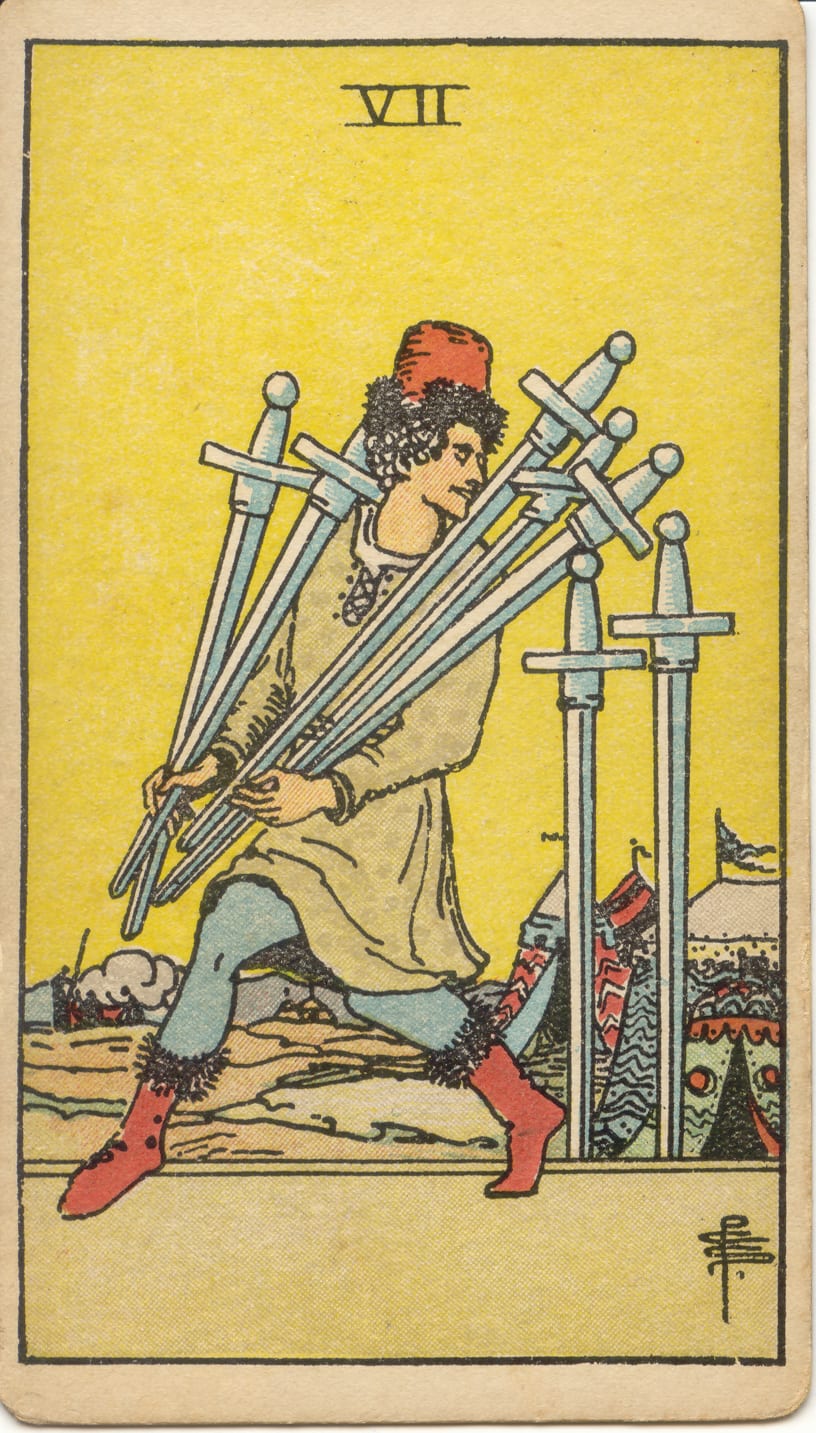
Five of Swords examines how a conflict is won and what that costs. Five of Wands may be a clash of ideas with goodwill intact; Seven of Swords emphasizes indirect or undisclosed actions. Ending an argument does not mean accepting every accusation as true.
Practical Guidance
◉
For a yes-or-no questionLeans toward no. The card suggests loss, conflict, or a situation where the cost outweighs the benefit.
◷
A clue about timingOften points to a period of tension that needs to resolve before progress can continue.
◈
Common contextsFive of Swords appears when conflict is present and someone needs to ask whether fighting is still worth it.
◆
When this card leads the readingIf dominant, the reading revolves around conflict, power dynamics, and the consequences of aggression or dishonesty.
◇
How this may show up in lifeYou win an argument through a cutting remark, then notice more distance afterward.Someone repeatedly changes the subject or attacks people personally until the discussion is no longer useful.You stop an argument because continuing would only cause more hurt.
✦
Related Cards
Notable Pairings
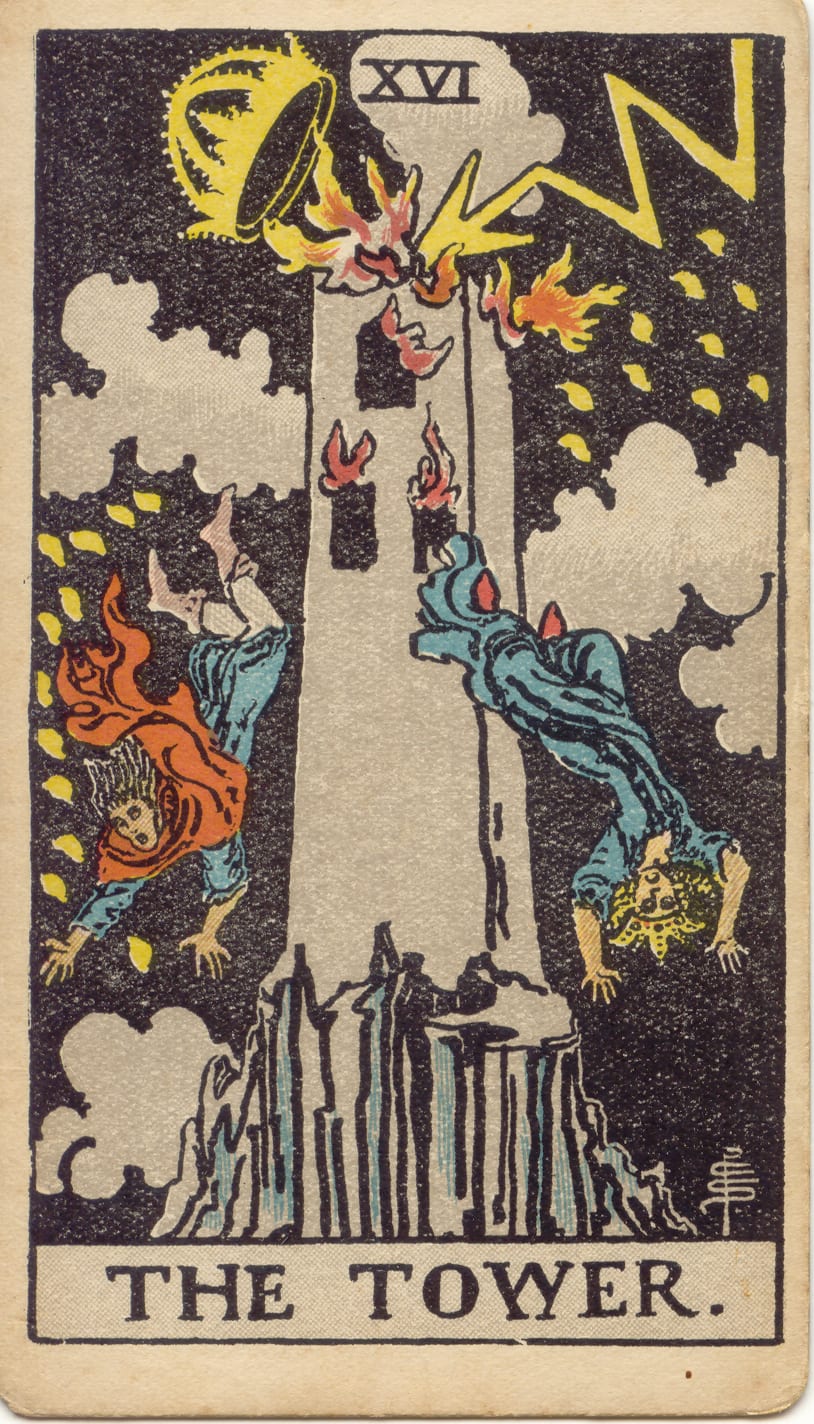
+ The Tower
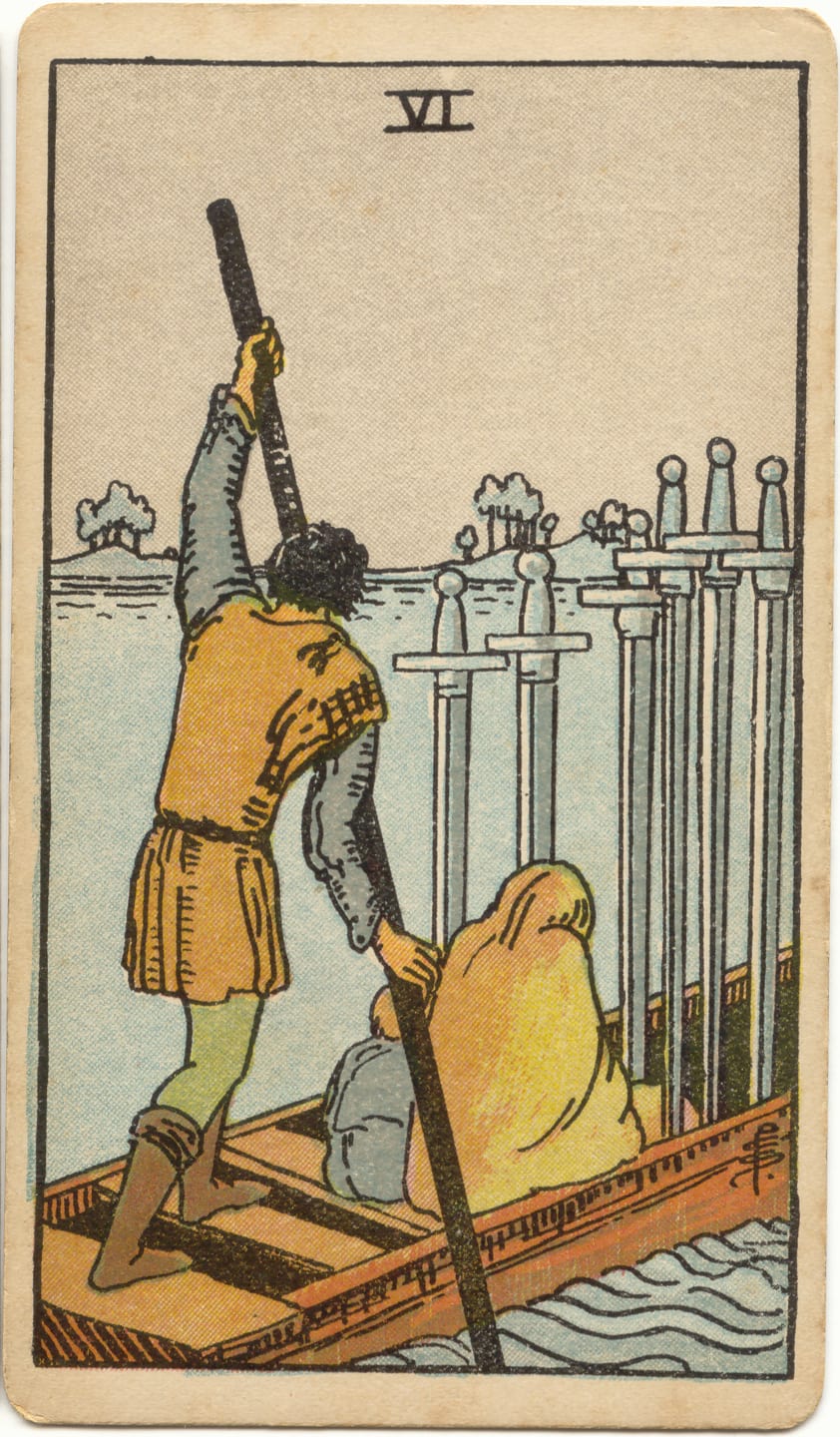
Together they show a catastrophic conflict or a complete breakdown in communication. Something is being destroyed.
✦
Reflection & Journaling
Reflection Questions
- ?Do I want to solve the problem or make the other person concede?
- ?What is the cost of continuing this argument?
- ?Do I need to apologize, set a boundary, or leave this exchange?
Journal Prompts
- ✎Describe a conflict using concrete actions rather than labels about anyone’s character. Note when the exchange became hurtful.
- ✎Write a way to end an argument without threats or sarcasm, including a condition for resuming if appropriate.
“I choose peace over pride and let go of battles that no longer serve me.”
✦
Questions About This Card
Quick, grounded answers based on this card's full meaning.
What does Five of Swords mean in Tarot?
Winning this argument may cost you the relationship — ask yourself if the victory is worth it.
What does Five of Swords mean upright?
Five of Swords upright points to conflict, dishonesty, or a battle where winning comes at a high personal cost. Someone may be acting selfishly, playing dirty, or pursuing victory without caring about the damage. The card asks you to consider whether this fight is worth the fallout — and whether walking away might actually be the stronger choice.
What does Five of Swords mean reversed?
Reversed, Five of Swords often shows the desire to move past conflict. You may be ready to apologize, forgive, or simply walk away from a fight that is no longer worth your energy. The card supports choosing peace over pride.
What does Five of Swords mean for love?
In love, Five of Swords can show toxic dynamics, power struggles, or arguments where someone needs to 'win' rather than understand. It may also indicate betrayal or dishonesty. The card warns against letting pride destroy what could be repaired with humility.
What does Five of Swords mean for career?
In career, this card can show workplace conflict, office politics, cutthroat competition, or someone undermining your work. It asks whether you want to win the battle or build a sustainable career.
Is Five of Swords a yes or no card?
Leans toward no. The card suggests loss, conflict, or a situation where the cost outweighs the benefit.
✦